

Denim Tears Hoodie Rundown: Cut and Fit, Fabric, and How to Style It
In all likelihood you arrived here after spotting the price tag, wanting to know whether the garment justifies the outlay. Fair question, and this guide takes it on in plain terms rather than brand speak. A denim tears hoodie in 2026 sits in an estimated $250 to $400 window at retail, with collaboration and older stock fetching more on the resale market. You are getting a heavyweight fleece body, a cotton wreath that is either screen-printed or embroidered, and a cut that behaves nothing like the hoodies most people already own. What is covered below is construction, measurements, three outfit directions that are worth copying, and a maintenance routine that keeps the print intact. Prices quoted throughout are market estimates and ranges, not fixed numbers, because Denim Tears works in drops and availability moves the number as much as the product does.
What the Money Actually Buys
Set the graphic aside and you end up with a solidly built piece of heavyweight fleece, comparable to what a decent mid-tier brand makes for roughly a third of the cost. The graphic is the whole difference, together with its meaning. The cotton wreath points to the history of cotton, the transatlantic slave trade and African-American experience, and it is the reason Tremaine Emory started the label in 2019. That is not a detail you can separate from the product, and people who read it as a pattern are missing the point of the purchase. The rest of the premium is pure scarcity, denim tears brand because the runs stay short and restocks are rare. So put honestly, it works out like this: you are spending about a hundred dollars for the hoodie itself and the rest for a graphic with a specific, deliberate meaning behind it. You have to judge whether the swap is worth it, but make it knowingly.
The Fabric, in Numbers
The bulk of Denim Tears fleece is quoted at 13 to 14 oz, that is roughly 440 to 475 gsm. A standard high-street hoodie, by contrast, comes in between 8 and 10 oz, roughly 280 to 340 gsm. That extra weight is immediately obvious when you handle one, and it reshapes how the hoodie sits across the shoulders. Expect a loopback or brushed-back cotton exterior, napped inside for warmth. Cuffs and hem resist going slack far longer in heavier fleece, which is its main practical merit. Expect shrinkage of around three to five per cent in length on the first wash if you use warm water, which is significant on a garment that is already short in the body. Wash it cold and it stays nearer about one per cent.
Getting the Size Right
Expect a squared cut with a dropped shoulder that sits large against typical US sizing. Anyone who usually takes a large often find a medium produces the shape it was designed to have. The squared-off shape in most photos of the brand comes from body length that is short against the width. Layering it over a denim tear shirt or a base layer calls for one size up. With only a tee underneath, take true size or go down. Approximate laid-flat measurements in inches for a typical heavyweight release follow below, with individual drops varying by an inch or so in either direction.
| Size label | Laid-flat chest | Length of body | Sleeve | Works best for |
|---|---|---|---|---|
| Small | 22 in | 26 in | 23 in | Comes up close on a 36-38 in chest |
| Medium | 24 in | 27 in | 24 in | The designed boxy cut on a 38-40 in chest |
| Large | 25.5 in | 28 in | 25 in | Easy drape, space for layers |
| X-Large | 27 in | 29 in | 25.5 in | A knowingly oversized shape |
Three Styling Directions That Work
Since a heavy, graphic-forward hoodie dominates, everything around it must stay understated. The working rule is one loud piece and everything else supporting it. Volume needs balance too: a boxy top wants either a straight-leg trouser or a properly wide one, not a skinny cut that makes the proportions look accidental. Colour causes less trouble than people think, because the wreath print is typically white and green on a solid ground, which sits cleanly against indigo, black, ecru and grey. The eye already has enough to look at, so keep footwear simple. The two subsections below cover the routes that work best, and the third option is the plainest of all: the hoodie with plain grey sweatpants and white sneakers, which works because it refuses to compete with itself.
Over Denim Tears Jeans
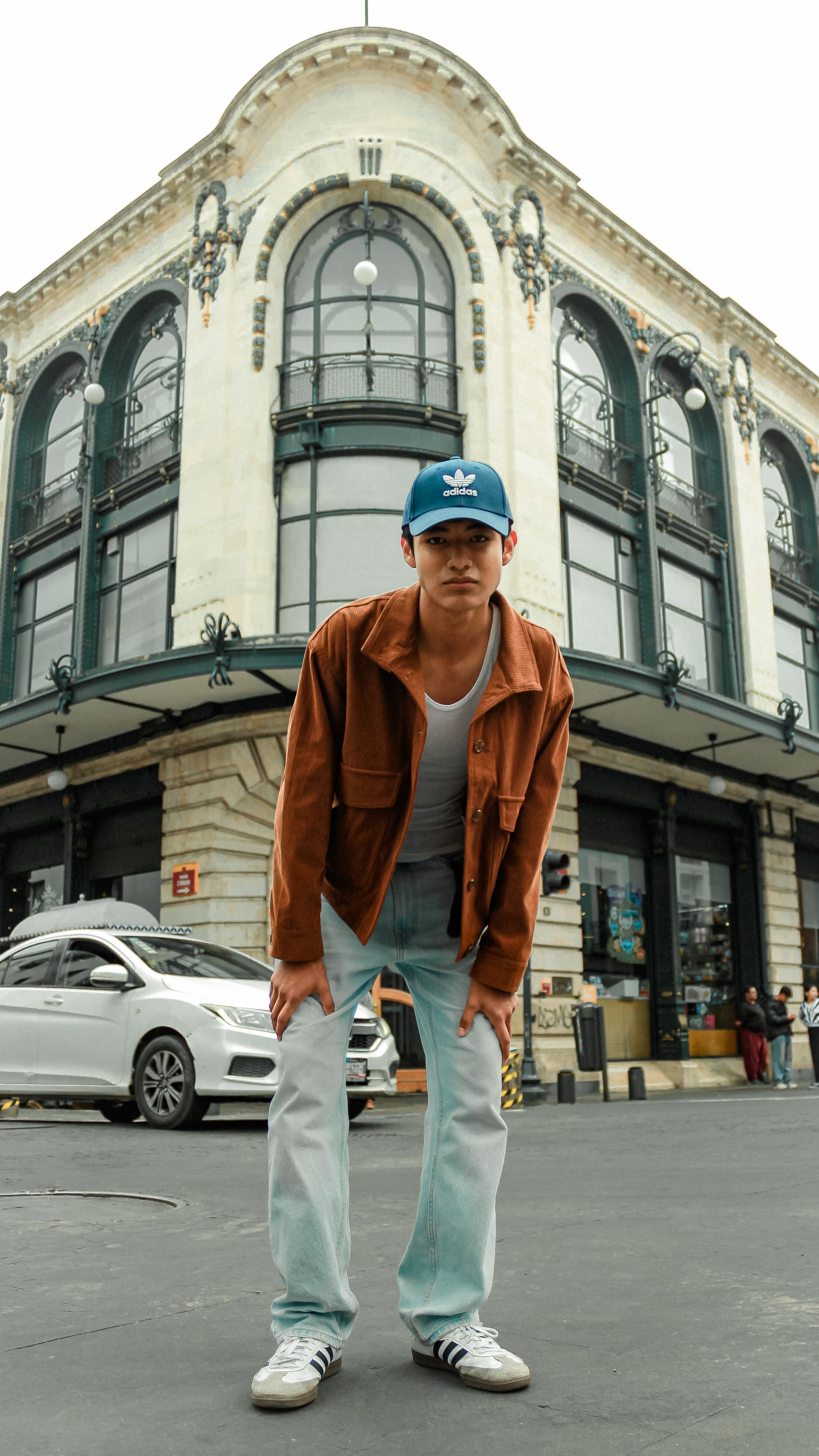
The most obvious combination is the hoodie with denim tears jeans, which is also the one most often botched. Run two wreath prints at once and it reads as a uniform rather than an outfit; let one item hold the print and keep the other plain. A wreath-printed hoodie over clean straight-leg indigo is the safer way round. Flip it round and the jeans carry the print, topped by a plain heavyweight hoodie in ecru, black or washed navy. Hold the hem break short, because a boxy top and a stacked hem together shorten the leg line badly. A single turn-up of an inch and a half is normally all you need.
Away From Denim: Trousers and Shorts
Outside denim, the hoodie layers well over cotton trousers with a pleat in stone, olive or charcoal. What makes it work is the formality gap between heavy fleece and a tailored trouser, which reads as deliberate rather than sloppy. That same thinking applies to denim tears shorts in warmer months: hoodie left open over a plain tee, shorts stopping just above the knee. Sock length shifts the balance further than people realise, so make the choice on purpose. To stay inside the brand, denim tear pants in a relaxed straight cut do the same job. Weight for contrast, colour kept calm is the rule in each case.
Care That Preserves the Print
Heat and friction, not age, that finish off a screen print. The tumble dryer is responsible for almost every ruined denim hoodie. The routine that follows is plain, yet it works, and for free. Washing frequency matters more than technique: fleece seldom needs washing after each wear, and airing a hoodie overnight handles most of what a wash would. Expect a properly treated piece to hold its print for five to ten years of regular wear. A badly treated one will crack visibly inside a single winter.
- Every wash starts with the hoodie going inside out, no exceptions.
- Use a gentle cycle and keep the water at 30 degrees Celsius or below.
- Avoid fabric softener, which sits on the fibres and takes the life out of the print.
- Wet fleece is heavy enough to stretch the shoulders, so lay it flat instead of hanging it.
- Do not iron directly over the wreath; if you must press it, do so from the reverse with a cloth in between.
A Checklist Before You Buy
Run through the following in order, and do not skip the measuring step. Fit, not quality, drives most disappointment with this brand, and it is the one variable you can nail down entirely before spending anything. Five minutes and a tape measure on a hoodie you already like is time well spent. Trust the table above, not by the size label. If the two disagree, trust the tape. The checklist below is short on purpose.
- Lay a hoodie you already own flat and measure across the chest and down the centre back.
- Compare those numbers to the size column above, not to your usual letter size.
- Before you pay heavyweight money, confirm the weight is stated in oz or gsm.
- Reproductions fail first in the bolls, so zoom in on the wreath print.
- Take anything under roughly $150 for a current release as a reason to dig deeper, not to rush the purchase.